
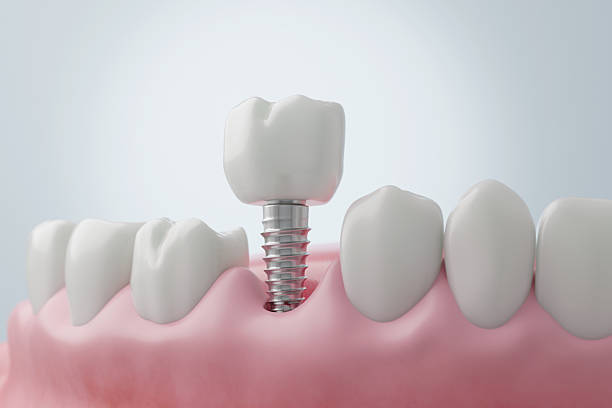
Guided bone regeneration (GBR) is a surgical technique used in implant dentistry to rebuild deficient jawbone and create an environment that supports bone growth where an implant needs additional support. It uses a protective barrier membrane, often together with bone graft material, to create an environment where new bone can develop in an area that lacks adequate support.
This matters for dental implants because an implant needs a sound foundation of supporting alveolar bone, and bone augmentation may help rebuild deficient areas when the existing bone cannot adequately support the planned implant. Some patients have localized bone deficiencies caused by tooth loss, periodontal disease, trauma, or anatomy. GBR is one way to address those gaps before or during implant placement. It is not right for every bone defect, and it does not guarantee a particular amount of new bone.
At Bayside Oral & Facial Surgery in Seekonk, MA, oral and maxillofacial surgeons evaluate the bone at each implant site individually. This article explains how the membrane works, when surgeons consider GBR, how they perform it, how they evaluate healing, and how regeneration connects to dental implant treatment in Seekonk.
What Is Guided Bone Regeneration in Dental Implant Surgery?
Guided bone regeneration is a regenerative approach that manages a bone defect, creates or maintains space for new bone, and uses a barrier to separate that space from the surrounding soft tissue. The technique grew out of guided tissue regeneration, a barrier method used for periodontal defects around natural teeth, connecting GBR with the field of periodontics and the management of supporting tissues.
Bone regeneration is a biological process supported by careful surgical planning, stable graft placement, adequate blood supply, and space maintenance. These are important principles for predictable bone regeneration, although outcomes still depend on the individual defect and healing response.
How Guided Bone Regeneration Helps Rebuild Missing Jawbone
New bone forms best under the right conditions. The site needs a healthy blood supply, bone-forming cells, and a stable environment. Graft material can provide structure or a scaffold for new bone. The membrane protects the healing space, called the regenerative compartment, which helps keep the blood clot stable while blood vessels and bone-forming cells move in.
Why Bone Grafting Alone Is Not the Same as Guided Bone Regeneration
Bone grafting is a broad term for procedures that place graft material to rebuild or support bone. GBR is a specific technique that adds a barrier strategy, usually alongside graft material.
Not every grafting procedure is GBR, and not every defect needs a membrane. Your surgeon decides based on the size and shape of the defect.
How GBR Supports Dental Implant Placement and Stability
The purpose of GBR is to create or maintain enough supporting bone where the implant will go. This makes bone regeneration in implant dentistry relevant both before implant placement and when treating selected defects involving bone regeneration around endosseous implants. It can be done in two ways. In one, the surgeon regenerates bone before placing the implant. In the other, the surgeon manages a defect around an implant during the same surgery.
GBR does not automatically give an implant immediate stability. How firmly an implant sits at placement and how much bone regenerates are separate questions.
How Do Barrier Membranes Help New Bone Grow?
A barrier membrane plays an essential role in guided bone regeneration (GBR) by protecting the grafted area while new bone develops. It separates the regenerative space from the surrounding soft tissue, preventing faster-growing cells from entering the defect before slower-growing bone-forming cells can populate it.
How a Barrier Membrane Separates Soft Tissue From the Grafting Site
Soft-tissue cells can grow into a bone defect faster than bone-forming cells. Without a barrier, this growth may interfere with bone regeneration. A GBR membrane helps maintain a protected space where bone-forming cells can develop the new tissue needed to support a future dental implant.
Why Space Maintenance Matters
The membrane also helps preserve the space needed for new bone formation. When the grafted area collapses or loses volume, bone regeneration may become less predictable. The membrane, together with the graft material and surrounding bone, helps stabilize the regenerative space during healing. In larger or more complex defects, a reinforced membrane may provide additional support when needed.
How Membrane Selection Affects Treatment
Dentists may use resorbable or non-resorbable membranes, depending on the defect and treatment plan. Resorbable membranes break down naturally over time, while non-resorbable membranes may require removal. The clinician considers factors such as defect size, shape, membrane stability, and the need for space maintenance when selecting the appropriate option.
The goal is to create stable conditions for bone regeneration while protecting the grafted area throughout healing.
What Types of Barrier Membranes Are Used in Guided Bone Regeneration?
Barrier membranes fall into two main groups, resorbable and non-resorbable, and some are reinforced for extra support. The American Association of Oral and Maxillofacial Surgeons explains in its overview of bone grafts and membranes that resorbable membranes dissolve over time and are often made of collagen. Non-resorbable membranes generally need to be removed later. No membrane is best for every case.
Resorbable Collagen Membranes
Resorbable membranes, often made of collagen, are designed to break down over time, so they typically do not need a separate procedure just to remove the membrane.
That breakdown is convenient, but the barrier may not last as long as a non-resorbable one. Many resorbable membranes also offer limited structural support, so they are often paired with graft material that holds the space.
Non-Resorbable Membranes
Non-resorbable membranes keep their shape and barrier function for longer. This can help in selected situations that need more structural support. The tradeoff is that they usually require a later procedure to remove them.
Examples include membranes made of PTFE, a durable synthetic material. Different PTFE membranes are not interchangeable, and each has its own design and handling considerations.
When Reinforced or Space-Maintaining Membranes May Be Considered
Larger or less contained defects may need more structural support to keep the intended space open. In those cases, a surgeon may consider a membrane reinforced with titanium or a titanium mesh.
The added framework helps resist collapse, but it also adds technical considerations. Surgeons reserve these options for situations that need the extra support.
How the Surgeon Chooses the Appropriate Membrane
Selection depends on the individual case. Surgeons weigh several factors.
- Bone defect size and configuration
- Need for space maintenance
- Soft-tissue coverage
- Implant placement timing
- Expected healing environment
- Potential complications
- Patient-specific considerations
For example, a defect with few surrounding bone walls may need a more supportive membrane, and the membrane type can affect how the surgeon plans soft-tissue coverage. Membrane choice is a clinical decision made for each patient. No brand or material is right for everyone.
When Is Guided Bone Regeneration Needed Before Dental Implants?
Guided bone regeneration is considered when the available bone is not enough to support a planned implant and the problem is localized enough for regeneration to address. For patients evaluating dental implants in Seekonk, MA, the surgeon makes this call after an exam and appropriate imaging.
Bone Loss After a Tooth Has Been Missing for Years
When a tooth has been gone for years, the ridge can gradually narrow or lose height, which can change how much bone is available for an implant.
In some cases, regeneration may be needed to rebuild enough bone for an implant to be placed in a good position.
Thin Jawbone That Cannot Adequately Support the Planned Implant
A ridge that is too thin can make it difficult to place an implant in the planned position. Surgeons assess both horizontal bone width and vertical bone height to determine whether the available horizontal and vertical bone dimensions can adequately support the implant. Surgeons consider not only whether the implant can physically fit, but also whether enough bone will surround it.
When ridge width is limited, horizontal guided bone regeneration may be one option. When the defect involves insufficient ridge height, the surgeon may consider vertical bone augmentation or a suitable vertical guided bone regeneration approach, depending on the defect and the required support.
Bone Defects Caused by Periodontal Disease or Dental Infection
Gum disease and infection can cause bone loss around a tooth, which may affect implant-site planning. Active disease has to be evaluated and managed before any regenerative treatment, and GBR does not treat an infection on its own.
Jaw infection treatment can involve draining an abscess or removing the source tooth, and those steps come first. Regeneration may be considered once the area is healthy.
Bone Defects After Tooth Extraction or Dental Trauma
Damaged socket walls, fractures, or localized bone defects after an extraction or injury may need regenerative reconstruction.
This overlaps with socket preservation after tooth extraction, which focuses on protecting a fresh socket. The two can use similar materials and, in some cases, similar steps, but they are not the same thing. GBR is defined by its membrane-guided regeneration strategy.
Exposed Implant Threads or Inadequate Bone Coverage
Some bone defects around an implant, including implant dehiscence defects that leave implant threads exposed, may be considered for regenerative treatment. The surgeon evaluates the defect, the surrounding tissue, and the existing bone level before deciding whether GBR is appropriate. Whether that is possible depends on the shape of the defect, the implant’s stability, and the health of the surrounding tissue.
Not every exposed thread is suitable for GBR, and inflammation or infection around the implant must be evaluated first.
How Is Guided Bone Regeneration Performed for Dental Implants?
GBR is performed in stages. The surgeon evaluates the bone, prepares the site, places graft material and a barrier membrane, protects the gum tissue, and then monitors healing. The steps below give a general overview, not operative instructions, and your surgeon adjusts the plan to your bone.
Step 1: Evaluating the Jawbone With Clinical Examination and Imaging
The surgeon examines the area and evaluates bone height and width, nearby anatomical structures, and the planned implant position, using appropriate X-rays.
When it is clinically indicated, 3D CBCT imaging adds more detail about the bone. Not every case needs a 3D scan.
Step 2: Identifying the Bone Defect and Regeneration Goals
The size and shape of the defect influence the plan. A contained defect has bone walls around it, which can help hold graft material in place. A non-contained defect has fewer walls and often needs more support.
The two can behave differently during regeneration, so the surgeon sets goals for the amount and shape of bone needed.
Step 3: Preparing the Bone-Grafting Site
The surgeon gains access to the defect and prepares the bone surface to create conditions for regeneration. The exact approach varies, and no single technique is necessary for every patient.
Step 4: Placing Bone Graft Material to Support the Regenerative Space
Graft material can provide a scaffold and help maintain the intended contour of the new bone. The choice among autograft, allograft, xenograft, and synthetic bone substitutes depends on the clinical situation. These bone graft substitutes vary in composition and handling characteristics, so the surgeon selects a material that suits the defect and treatment plan. An article on bone grafting materials covers the differences in more detail.
Step 5: Positioning the Barrier Membrane Over the Graft
The surgeon places the membrane over the graft to separate the regenerative area from the overlying soft tissue and to help preserve the protected space.
How well the membrane fits and stays stable matters clinically, because gaps or movement can reduce its barrier function.
Step 6: Managing the Soft Tissue and Protecting the Site During Healing
The surgeon manages the gum tissue so the site is covered and protected while it heals. Careful soft-tissue handling and wound protection support the regenerative process.
Membrane exposure is a possible complication, and your surgeon should assess it if it happens.
Step 7: Evaluating Bone Regeneration Before the Next Treatment Stage
The surgeon assesses healing over time. They determine whether the new bone dimensions and the condition of the surrounding tissue support the next stage of implant treatment.
That decision is individualized, and it is not made on a fixed calendar.
Can Guided Bone Regeneration and Dental Implant Placement Be Done Together?
Sometimes. Depending on the case, GBR and implant placement can happen in the same surgery, or the bone can be regenerated first. This is a different question from immediate and delayed implant placement, which concerns when an implant goes in relative to a tooth extraction.
Simultaneous GBR and Implant Placement
In selected cases, an implant can achieve adequate initial stability while a localized defect around it is managed with GBR.
Initial implant fixation describes how firmly the implant sits in the existing bone. Regeneration describes how the surrounding defect is rebuilt.
Staged GBR Before Implant Placement
Larger defects, or sites where an implant cannot achieve stable fixation, may call for regeneration first. The surgeon then reassesses the site after healing and places the implant later.
What Determines Whether GBR Is Performed in One Stage or Two?
The decision depends on several factors.
- Available native bone
- Ability to achieve initial stability
- Defect dimensions
- Implant position
- Soft-tissue conditions
- Overall treatment complexity
For example, a small defect around an implant that sits firmly may allow a single stage. If the bone around the implant would be thin, or the implant cannot sit firmly, a staged approach may give more predictable regeneration. Initial stability is one deciding factor, and how implant stability develops after placement is covered in a separate article.
How Long Does Guided Bone Regeneration Take to Heal?
Healing happens in stages, and the timeline is individualized. Soft tissue closes over the site first, while bone regeneration takes longer, generally several months. Your surgeon determines when the site is ready for the next stage.
Early Healing After the GBR Procedure
In the first days and weeks, the wound begins to close, and some soreness and swelling are expected. The priority during this period is to protect the site from disruption. Follow your surgeon’s instructions. Bayside’s surgical instructions cover general aftercare for common oral surgery procedures, and your surgeon will tell you what applies to your procedure.
Bone Formation and Graft Remodeling Over Several Months
Over the following months, new bone forms and the graft remodels. Because regeneration takes time, the site is usually reassessed before an implant is placed.
Not all grafts mature at the same rate. The pace depends on the defect, the materials used, and your healing response.
How Imaging and Clinical Evaluation Help Assess Regenerated Bone
The surgeon uses clinical findings and imaging to assess healing. Clinical findings include the health of the gum tissue and any signs of infection or membrane exposure. Imaging helps show bone dimensions, but it has limits.
How bone looks on an X-ray or scan does not prove that it is mature, fully functional bone.
Why Larger Bone Defects May Require Longer or More Complex Treatment
A larger defect needs more graft, more space maintenance, and a longer path for blood vessels to reach the center of the site. Membrane support and graft stability are also harder to maintain, so healing is more complex and the plan often takes longer.
What Factors Influence the Success of Guided Bone Regeneration?
Success depends on the defect, the membrane and graft, the health of the surrounding tissue, and the patient’s overall healing capacity. No single factor decides the result, and no one can promise a specific amount of new bone.
Bone Defect Shape and Available Surrounding Bone
A contained defect with bone walls around it often provides better conditions for regeneration than a large, open defect. Surrounding bone supplies bone-forming cells and helps hold graft material in place.
Membrane Stability and Protection From Soft-Tissue Ingrowth
A stable membrane keeps the protected compartment intact. When it shifts, or the site is breached, soft tissue can enter, and regeneration may be limited.
Blood Supply and Soft-Tissue Health
Healthy gum tissue and a good blood supply support regeneration. Thin, scarred, or inflamed tissue can make it harder to cover the site and nourish the new bone.
Smoking, Medical Conditions, and Healing Capacity
Smoking, poorly controlled diabetes, certain medications, and other health factors can affect surgical healing. Smoking can reduce blood flow to healing tissue, and poorly controlled diabetes can slow healing and raise the risk of infection. Some medications can also affect bone or wound healing.
None of these automatically rules out treatment. Your surgeon reviews them so the plan can be adjusted and risks can be discussed.
Infection Control and Postoperative Care
Managing existing disease, keeping the wound clean as instructed, and attending follow-up visits all protect the regenerative environment. Missing follow-up can allow small problems to go unnoticed.
What Complications Can Occur After Guided Bone Regeneration?
Complications can occur after GBR, but they are not inevitable. The main concerns involve the membrane, the graft, healing, or the amount of bone that forms. Contact your surgeon if anything seems off, and do not try to handle problems yourself.
Barrier Membrane Exposure
Membrane exposure means part of the membrane becomes visible through the gum tissue. How much it matters depends on the membrane type, the timing, and the clinical situation.
A resorbable membrane may break down early once exposed, while some dense non-resorbable membranes are designed to tolerate exposure. In some cases, exposure can reduce the bone gained. If you notice it, contact your surgeon rather than touching or trimming the membrane.
Graft Material Exposure or Loss
You may notice small particles in your mouth after surgery. Mention them to your surgeon.
Losing a few particles does not mean treatment has failed, but your surgeon can check whether the graft has shifted or the site has opened.
Infection or Delayed Healing
Call your surgeon for pain that gets worse instead of better, swelling that keeps increasing after the first few days, a fever that lasts, or a bad taste or pus-like drainage. These can signal infection or delayed healing.
Seek urgent medical care right away for trouble breathing or swallowing.
Incomplete Bone Regeneration
Sometimes the regenerated bone does not reach the planned dimensions. In that case, additional treatment or a revised implant plan may be needed.
Guided Bone Regeneration vs Other Dental Bone-Grafting Procedures
GBR differs from other bone-grafting procedures in that a barrier membrane is central to the technique. Socket preservation, ridge augmentation, and sinus lift mainly differ in purpose and location, and bone grafting is the broad category that covers them.
| Procedure | Primary Purpose | Key Distinction |
|---|---|---|
| Guided Bone Regeneration | Encourage bone formation within a protected defect | Barrier membrane is central to the technique |
| Socket Preservation | Limit ridge changes after extraction | Focuses on the fresh tooth socket |
| Ridge Augmentation | Increase deficient ridge dimensions | Broader reconstructive objective, and may use GBR |
| Sinus Lift | Increase available bone in the posterior upper jaw near the sinus | Anatomically specific augmentation |
| Bone Grafting | Broad category of procedures using graft materials | Does not necessarily involve a barrier membrane |
GBR vs Socket Preservation After Extraction
Socket preservation focuses on maintaining an extraction site. GBR is defined by its regenerative strategy.
The two can overlap in some procedures, but they are not interchangeable terms.
GBR vs Ridge Augmentation
Ridge augmentation describes the treatment goal of increasing ridge dimensions. GBR can be one technique used to reach that goal.
GBR vs Sinus Lift Surgery
Sinus augmentation, often called a sinus lift, addresses a specific anatomical limitation, which is too little bone height in the back of the upper jaw below the sinus. Sinus lift surgery lifts the sinus floor and adds bone there. That differs from membrane-guided regeneration of a localized ridge defect.
How Does Guided Bone Regeneration Support Long-Term Dental Implant Treatment?
GBR supports long-term implant treatment by helping create enough bone for the implant to be placed in a good position. It does not decide whether an implant succeeds. Surgery, restoration design, and maintenance all contribute.
Creating a More Favorable Foundation for Implant Positioning
Sufficient bone dimensions can help support appropriate implant placement and restorative planning. That gives the surgeon more freedom to place the implant where the final tooth needs it.
Why Regenerated Bone Must Be Evaluated Before Implant Loading
Regenerated bone and implant stability are related but separate. The surgeon first confirms that the new bone is ready for an implant.
After placement, bone gradually bonds to the implant surface in a process called osseointegration, and implant stability develops along with it. Both are downstream steps, and the surgeon checks them before attaching the final tooth, a step called loading.
The Relationship Between Bone Support, Implant Restoration, and Maintenance
A well-planned implant needs the right anatomy, precise placement, a well-designed restoration, and long-term maintenance. Regenerated bone helps with the first of those, the anatomy.
How the final tooth is built and attached is covered in an article on dental implant restorations.
Frequently Asked Questions About Guided Bone Regeneration
What is guided bone regeneration in dental implants?
Guided bone regeneration is a surgical technique that uses a barrier membrane, often combined with bone graft material, to protect an area where new bone formation is needed. The membrane helps keep soft tissue out while bone-forming cells fill the space. It may help improve the bone foundation for dental implant treatment.
Is guided bone regeneration the same as a bone graft?
Not exactly. Bone grafting is a broad treatment category that covers many procedures using graft material. GBR is a specific regenerative technique that adds a protective membrane to manage the healing environment and support bone formation. Many GBR procedures include a graft, but not every graft procedure involves a membrane.
Does everyone who needs dental implants require GBR?
No. Many patients have adequate bone for implant placement without additional regenerative surgery. GBR is considered when particular bone deficiencies or defects affect the treatment plan. An exam and appropriate imaging help your surgeon decide whether your bone is sufficient or whether regeneration would help.
How long does guided bone regeneration take?
Bone regeneration generally occurs over several months, but the timeline varies with the defect, the grafting approach, medical factors, and your healing response. Soft tissue heals sooner than bone. Your surgeon determines when the site is ready for the next treatment stage, and there is no single schedule that applies to every patient.
Can GBR and dental implant placement happen at the same appointment?
Yes, in selected cases. Simultaneous treatment may be possible when adequate initial implant stability can be achieved, and the defect can be managed appropriately. Other patients benefit from staged treatment, where bone is regenerated first, and the implant is placed later. Your surgeon recommends one approach based on your bone and the defect.
What happens to the barrier membrane after GBR?
Resorbable membranes are designed to break down over time, so they usually do not need to be removed. Non-resorbable membranes generally require planned removal during a later procedure. The specific approach depends on the membrane chosen and the treatment plan, and your surgeon will explain what to expect for your case.
Is guided bone regeneration painful?
The procedure is performed with appropriate anesthesia, and some discomfort and swelling can occur afterward. The experience varies with the complexity of the procedure and your individual healing. Your surgeon can describe what to expect and how to manage discomfort. Call the office if pain gets worse instead of improving.
Can GBR fail to produce enough bone for dental implants?
Yes. Regeneration is not guaranteed to achieve a specific bone volume. If the result is insufficient, your surgeon may discuss additional treatment or alternative implant-planning options. This is why surgeons review expectations with you before treatment starts and reassess the site as it heals.
Can guided bone regeneration help with exposed dental implant threads?
In selected situations, regenerative treatment may be considered for localized defects around implants. Suitability depends on the defect, implant stability, the surrounding tissues, and whether inflammation or infection is present. Not every exposed thread can be treated this way, and an exam is needed to determine your options.
Explore Bone Regeneration and Dental Implant Options in Seekonk, MA
Not having enough jawbone does not automatically rule out dental implants, but it can change the surgical plan. Guided bone regeneration is one potential way to improve the supporting bone, depending on the defect and your individual circumstances.
If you are considering dental implants in Seekonk, MA, schedule an evaluation with Bayside Oral & Facial Surgery. This is especially true if you have been told you do not have enough bone. Our oral and maxillofacial surgeons see patients from Seekonk and nearby communities including Attleboro, East Providence, and Providence, Rhode Island. We can review your bone, discuss implant-site preparation options, and explain what each could mean for your treatment plan.
