
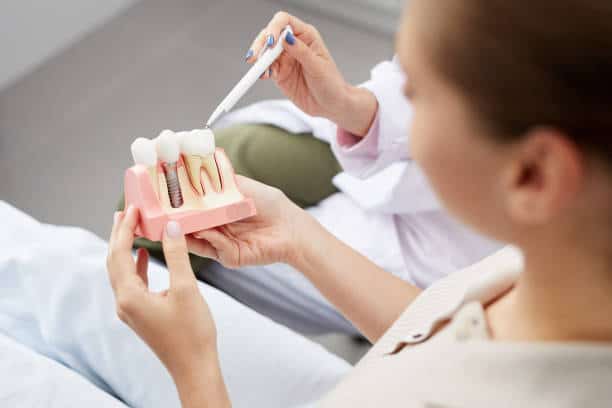
One of the first questions many patients ask after learning they need a tooth removed is simple: “Can my implant be placed the same day?” It is a fair question, and the answer depends on more than convenience.
Advances in implant dentistry now allow some patients to receive dental implants in Seekonk much sooner than in the past. But timing is not automatic. It depends on the condition of the extraction site, the surrounding bone, and your overall oral health. An oral surgeon studies these factors before recommending a treatment timeline.
Implant placement generally happens in one of three windows: immediately after extraction, after several weeks of healing, or after several months of healing. Each approach can lead to strong, lasting results when it fits the patient.
This guide compares immediate and delayed placement, explains who tends to qualify for each, and shows why careful implant treatment planning matters. At Bayside Oral & Facial Surgery in Seekonk, MA, the goal is the same for every patient: choose the timeline that gives your tooth replacement the best chance to succeed.
What Is Immediate Dental Implant Placement?
Immediate dental implant placement means the implant is placed during the same appointment as the tooth extraction. In one visit, the surgeon removes the tooth and positions the implant into the socket.
There is an important distinction to understand. Placing the implant is not the same as attaching the final crown. Even with immediate implants, the visible tooth (the implant restoration) is often added later, after healing. In some cases a temporary tooth is attached the same day, but the permanent one usually follows.
Immediate placement is a carefully planned surgical decision, not a shortcut. Combining tooth extraction and implant into one procedure only works when specific clinical conditions are met. Your surgeon confirms those conditions before recommending this approach, so implant surgery is planned around your anatomy rather than a schedule.
How Immediate Implant Placement Works
When conditions allow, an immediate implant follows a clear sequence:
- Tooth extraction. The surgeon removes the tooth as gently as possible to protect the surrounding bone.
- Socket evaluation. The extraction socket is examined for infection, bone walls, and enough support for the implant.
- Cleaning the site. The socket is thoroughly cleaned to remove infected or damaged tissue.
- Implant placement. The implant is positioned into the prepared site.
- Bone grafting if necessary. Gaps between the implant and socket walls are often filled with graft material.
- Healing cap or temporary restoration. A healing cap or, when appropriate, a temporary tooth is added.
Success here relies on primary stability, which means the implant sits firmly in the bone right after placement with no movement. Primary stability is a fundamental requirement for the implant to heal and fuse with the bone. Without it, immediate placement is not recommended.
Benefits of Immediate Implant Placement
For the right patient, an immediate implant offers real advantages:
- Fewer surgical procedures overall
- A shorter total treatment timeline
- Help preserving bone and gum architecture around the socket
- Fewer appointments and less time in the chair
- Improved aesthetics in selected front-tooth cases
These benefits apply only to properly selected patients. Immediate tooth replacement is a strong option when the site is healthy, but it is not right for everyone. The implant treatment that lasts is the one matched to your specific situation.
What Is Delayed Dental Implant Placement?
Delayed dental implant placement means waiting for the extraction site to heal before the implant goes in. Instead of one combined procedure, the extraction and the implant happen as separate steps.
For many patients, this is the safest and most predictable path. Allowing the site to heal first gives the body time to resolve infection, remodel bone, and let the soft tissue mature. A healed, stable foundation makes the implant easier to place in the ideal position.
Delayed treatment is not a single fixed protocol. Some patients are ready in a matter of weeks, while others benefit from several months of healing. The right delayed timeline depends on how much healing the site needs, which your oral surgeon determines during planning.
When Healing Before Implant Placement Is Recommended
A surgeon may recommend healing before implant placement in situations such as:
- Active infection at or around the tooth
- Extensive bone loss that leaves too little support
- Large defects in the socket walls
- Difficult extractions that disturb surrounding bone
- Severe periodontal disease affecting the area
- Inadequate primary stability at the time of extraction
In these cases, waiting improves long-term outcomes. Bone healing rebuilds a firmer base, infection clears, and the surgeon gains a more predictable site to work with. A short delay early on supports lasting implant success later.
Advantages of Delayed Implant Placement
Choosing to wait is a clinical strength, not a sign that something went wrong. Delayed placement offers:
- More predictable bone healing
- Easier, more precise implant positioning
- Reduced risk of infection at placement
- Better maturation of any bone graft
- More complete treatment planning based on a healed site
Delayed treatment also allows better maturation of any bone graft, and some cases use platelet concentrates that support healing to encourage bone regeneration. For patients who need it, staged treatment gives the implant a stable, well-formed foundation.
How Oral Surgeons Decide Between Immediate and Delayed Implant Placement
There is no universal rule that makes one timeline better than the other. The decision comes from what the surgeon finds when evaluating your mouth, your bone, and your goals.
A skilled oral surgeon in Seekonk weighs several clinical factors together rather than following a one-size-fits-all script. The sections below cover the main ones.
Bone Volume and Bone Quality
Bone is the foundation of every implant. During planning, the surgeon assesses bone thickness, ridge width, and bone density, often using a 3D CBCT scan for an accurate view.
Healthy bone with good volume improves the predictability of immediate placement, because it helps the implant achieve strong primary stability. When bone is thin or deficient, procedures such as bone grafting or ridge augmentation may be recommended first to build a stable base.
Presence of Infection
Infection at the tooth site matters, but it does not automatically rule out an immediate implant. A localized issue may still allow same-day placement after thorough cleaning, while a severe abscess, active infection, advanced periodontal disease, or significant inflammation often calls for healing first. Your surgeon judges each case on its own findings.
Gum Tissue and Smile Zone Considerations
Gum thickness and tissue quality influence both function and appearance, and they matter most in the smile zone at the front of the mouth. Thicker, healthy gum tissue provides better soft tissue support and helps protect the gum peaks between teeth, known as the papillae.
For a front tooth, preserving that tissue is central to a natural-looking result. Thin or fragile gums may shift the plan toward a staged approach that protects aesthetic outcomes.
Bite Forces and Functional Requirements
How your teeth meet and how hard you chew affect implant timing and restoration planning. Heavy bite forces, an uneven bite, or teeth grinding (bruxism) place extra stress on a new implant. When these forces are present, the surgeon may adjust the timeline or delay loading the implant to protect early healing.
Does Immediate Implant Placement Reduce Bone Loss?
This is one of the most searched questions about implants, and the honest answer is nuanced. Tooth extraction naturally leads to bone remodeling. The jawbone that once held the tooth begins to change once the tooth is gone.
An immediate implant may help preserve some of the bone and gum architecture around the site, but it cannot completely stop this natural process. Research on alveolar ridge changes shows that immediate placement alone does not fully prevent bone remodeling, and the American Association of Oral and Maxillofacial Surgeons explains why the jawbone resorbs after a tooth is lost.
Techniques such as socket preservation, ridge preservation, and bone grafting support the healing response and help maintain the site. The point is realistic expectations: implants restore teeth beautifully, but no method erases the body’s natural remodeling entirely.
Why Bone Remodeling Happens After Tooth Extraction
A natural tooth root constantly stimulates the bone around it through daily chewing. That stimulation tells the body to maintain the bone. Once the tooth and its root are removed, the signal stops, and the body gradually reabsorbs bone it no longer sees as needed. Most of this change happens in the first several months after extraction, which is one reason timing decisions matter.
How Bone Grafting May Improve Long-Term Implant Success
Bone grafting adds material to the site to support new bone growth. When a tooth is removed, socket grafting or ridge preservation can help maintain the shape and volume of the ridge.
This gives future implant support a firmer base. Depending on your needs, your surgeon may recommend ridge augmentation or a sinus lift in the upper back jaw. Not every patient needs grafting, but for many extraction sites it improves the odds of long-term success.
Immediate vs. Delayed Placement: A Quick Comparison
| Factor | Immediate Placement | Delayed Placement |
|---|---|---|
| Timing | Implant placed at extraction | Implant placed after healing |
| Best Suited For | Healthy bone and gums, no active infection | Infection, bone loss, or complex sites |
| Number of Surgeries | Often fewer | Usually staged |
| Bone/Gum Preservation | May help preserve some architecture | Site heals before placement |
| Predictability | High in selected cases | High across a wide range of cases |
| Grafting | Often used to fill socket gaps | May include socket or ridge preservation |
Both approaches can succeed. The right one depends on your evaluation.
Which Patients May Be Better Candidates for Immediate Implants?
Some patients tend to be stronger candidates for an immediate implant. These profiles are examples, not guarantees, and every case still requires a full evaluation:
- Healthy bone with enough volume and density
- Healthy gum tissue with no active disease
- No active infection at the site
- Non-smokers, since smoking can slow healing
- Single tooth replacement in a stable area
- Front tooth trauma where the socket walls remain intact
Even a patient who fits every point above still needs imaging and an exam before a surgeon confirms candidacy.
Which Patients Often Benefit From Delayed Implant Placement?
Delayed placement is a reassuring, reliable choice for many people, especially those with more complex needs. This path often suits patients with:
- Severe infection that needs to clear first
- Significant bone loss requiring rebuilding
- Multiple extractions across the mouth
- A need for extensive grafting
- Medically complex health situations
- A history of smoking
- Advanced periodontal disease
Needing a delayed timeline is not a setback. It simply means the plan is built around giving your implant the strongest possible foundation.
How Advanced 3D Imaging Improves Implant Timing Decisions
Accurate planning starts with a clear view of your anatomy. A CBCT scan produces a detailed 3D image that a standard X-ray cannot match.
With CBCT implant planning, an oral surgeon can evaluate bone volume, ridge dimensions, the position of the sinuses, and the location of nearby nerves. This 3D view helps the surgeon determine whether immediate placement is appropriate and plan implant position more safely. Bone quality is assessed using the full clinical and imaging evaluation rather than CBCT measurements alone.
Why Personalized Treatment Planning Produces Better Outcomes
No two mouths are the same, so implant treatment should never follow a one-size-fits-all approach. Strong outcomes come from planning around your specific anatomy, oral health, medical history, smile goals, and functional needs.
Personalized planning is where experience shows. When each factor is weighed together, the chosen timeline supports better implant stability, appearance, and long-term function.
Frequently Asked Questions About Immediate vs. Delayed Dental Implants
Can I receive an implant the same day my tooth is removed?
Many patients can, but it is not automatic. Same-day placement depends on bone quality, the absence of active infection, and your overall oral health. An exam and imaging confirm whether you are a candidate.
Is delayed implant placement less successful?
No. Delayed treatment often provides highly predictable, long-lasting results. For patients with infection, bone loss, or complex sites, waiting to heal frequently gives the implant a stronger foundation.
Will I always need a bone graft if I wait?
Not always. Some patients have enough healthy bones and skip grafting entirely. Others benefit from socket or ridge preservation to maintain the site. Your surgeon will tell you what your specific case needs.
Which option heals faster?
It helps to separate total treatment time from biological healing. Immediate placement can shorten the overall treatment process because extraction and implant placement happen in one procedure. However, the healing and restoration timeline still depends on implant stability, bone quality, whether grafting is needed, and the type of restoration planned.
Which approach lasts longer?
Long-term success depends more on proper treatment planning, placement, and good maintenance than on timing alone. A well-planned delayed implant and a well-planned immediate implant can both last for many years.
Can immediate implants be placed after an infected tooth?
Sometimes. Certain infected sites can be treated immediately after thorough evaluation and careful cleaning of the socket. More severe infections usually need to heal before an implant is placed. The surgeon makes this call during your exam.
Schedule a Dental Implant Consultation in Seekonk to Determine the Right Treatment Timeline
There is no single correct timeline for every patient. The best approach is the one matched to your bone, your gums, and your goals.
If you have an upcoming extraction or are thinking about replacing a missing tooth, a consultation is the right next step. The oral surgeons at Bayside Oral & Facial Surgery evaluate bone quality, gum health, infection, bite forces, and your long-term goals before recommending immediate or delayed dental implant placement. Whether you are a candidate for immediate dental implants or would do better with a staged plan, personalized treatment planning helps protect your implant stability, appearance, and long-term success.
To find out which timeline fits you, schedule a dental implant consultation with an oral surgeon in Seekonk, or call our office to speak with our team.
