
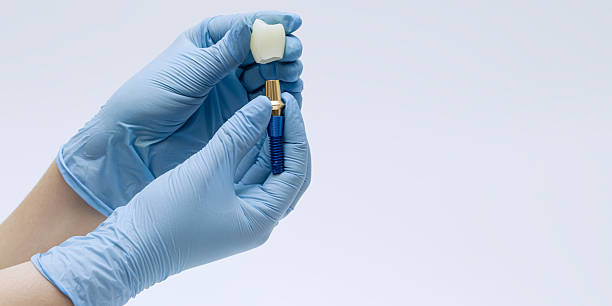
Healing after dental implant surgery is not just about waiting. The quality of bone integration and tissue repair during recovery plays a direct role in how well an implant performs over time. That is why many oral surgeons now use regenerative tools like PRP (Platelet-Rich Plasma) and PRF (Platelet-Rich Fibrin) to support the healing process.
Both PRP and PRF are created from the patient’s own blood. They concentrate natural growth factors and deliver them directly to the surgical site to support tissue repair and bone regeneration. These platelet concentrates are commonly used alongside dental implant placement, bone grafting, and sinus augmentation procedures.
At Bayside Oral & Facial Surgery in Seekonk, MA, treatment recommendations are based on each patient’s anatomy and surgical goals. PRP and PRF for dental implants may help support the healing response, tissue regeneration, and implant integration, though individual outcomes will always vary.
What Are PRP and PRF in Dental Implant Surgery?
PRP and PRF are regenerative platelet concentrates derived entirely from the patient’s own blood. They are not synthetic materials or artificial implants. Instead, they work by concentrating the body’s own healing proteins, called growth factors, and placing them directly at the surgical site.
These growth factors play a natural role in how the body responds to injury. By concentrating them, oral surgeons create a biologic environment that may better support tissue healing and bone repair after implant-related procedures.
It helps to understand the distinction between the different components involved in implant dentistry:
| Component | What It Is | Role in Treatment |
|---|---|---|
| Dental implant | Titanium post placed in the jaw | Replaces the tooth root |
| Bone graft | Grafting material to rebuild bone volume | Supports implant placement site |
| PRP / PRF | Patient’s own platelet concentrate | Supports healing and tissue repair |
PRP and PRF are biologic healing support tools. They do not replace the implant or the graft. They work alongside them to support the body’s natural repair response. At Bayside Oral & Facial Surgery, platelet concentrate therapy is part of a broader, individualized implant dentistry approach designed around each patient’s needs.
How Platelet Concentrates Are Created From the Patient’s Own Blood
The process of creating PRP or PRF starts with a simple blood draw, similar to a routine lab test. A small sample of the patient’s blood is collected at the surgical facility before the procedure begins.
The blood sample is then placed in a centrifuge, a medical device that spins the sample at a controlled speed. This spinning process separates the blood into its different components based on density.
The result is a concentrated layer of platelets and growth factors separated from the red blood cells. This concentrated portion is what becomes PRP or PRF, depending on the preparation method used.
The entire process takes place on the day of surgery. No outside donors are involved. No artificial additives are required. The material comes entirely from the patient’s own body, which is why it is classified as an autologous healing support.
The Difference Between PRP and PRF
While both PRP and PRF come from the patient’s blood and contain growth factors, they differ in their consistency and how they release those factors at the surgical site.
PRP (Platelet-Rich Plasma)
- Liquid form
- Prepared using anticoagulants during centrifugation
- Growth factors are released relatively quickly at the surgical site
- Often used as an injectable or mixed with grafting material
PRF (Platelet-Rich Fibrin)
- Forms a fibrin matrix, a soft, gel-like membrane
- Prepared without anticoagulants
- Growth factors are released gradually over time
- The fibrin matrix can be shaped and placed directly into the surgical site
- Acts as a natural scaffold to support tissue and bone repair
The PRF fibrin matrix is particularly useful in oral surgery because it can be physically placed over a graft or around an implant site, providing structural support in addition to growth factor delivery.
Both PRP and PRF support healing and regeneration. The choice between them depends on the specific procedure, the surgical site, and the surgeon’s clinical judgment.
Why Oral Surgeons Use PRP and PRF During Implant Procedures
Oral surgeons use PRP and PRF because implant surgery and bone grafting require the body to rebuild tissue and bone in a precise, controlled way. Supporting that process with concentrated growth factors can benefit the surgical outcome in several ways:
- Tissue healing support: Growth factors signal the body to begin repairing soft tissue around the implant site more effectively.
- Bone regeneration support: Platelets release proteins that promote new bone cell activity, which supports osseointegration and implant stability.
- Surgical site stabilization: The PRF fibrin matrix can physically stabilize a graft or implant site while healing begins.
- Reduced inflammation: Platelet concentrates support the natural healing cascade, which may help manage post-surgical inflammation.
These benefits connect directly to implant success. When healing is well-supported, bone graft integration improves, and the implant has a stronger biological foundation to anchor into.
How PRP and PRF Support Dental Implant Healing
Long-term implant success depends heavily on what happens during the healing phase. An implant that does not integrate properly with the surrounding bone will not function as intended. That is why the quality of healing matters, not just the placement of the implant itself.
PRP and PRF work by supporting the body’s natural repair response at the cellular level. They do not replace healing. They provide a more concentrated environment for it. This distinction is important for patients to understand: platelet concentrates are a regenerative support tool, not a substitute for proper surgical technique or post-operative care.
Supporting Bone Regeneration Around Dental Implants
After an implant is placed, the surrounding bone must remodel and grow around the titanium post through a process called osseointegration. This is how an implant becomes stable and functional within the jaw.
PRP and PRF growth factors may support this process by:
- Stimulating bone-forming cells (osteoblasts) at the implant site
- Supporting the development of new bone tissue around the implant
- Improving the quality of the bone-implant interface
- Promoting bone healing after implants where grafting was required
For patients who have experienced bone loss from missing teeth or jawbone deterioration, this regenerative support becomes especially relevant. When bone volume or density is a concern, platelet concentrates can be used alongside bone grafting to help create a more stable implant support structure.
Osseointegration typically occurs over a period of weeks to months. Supporting that process with growth factors from PRP or PRF may help the bone respond more predictably during that critical integration window.
Helping Soft Tissue Heal After Oral Surgery
Bone integration is only one part of the healing picture. The gum tissue surrounding the implant site also needs to heal properly. Soft tissue recovery affects both the comfort of recovery and the long-term health of the implant.
PRF in particular has shown value in supporting gum healing after implants. Because the fibrin matrix can be placed directly over soft tissue or sutured into position, it serves as a physical barrier that supports tissue closure and reduces exposure of the underlying bone or graft.
Benefits for soft tissue healing may include:
- Faster tissue closure at the surgical site
- Support for healthy gum healing after implants
- A more stable wound environment during early recovery
- Reduced risk of graft or implant site exposure
This is especially relevant in cases where multiple procedures are performed at the same time, such as tooth extraction, bone grafting, and implant placement in a single visit.
Reducing Inflammation and Supporting Recovery
Some degree of swelling and discomfort after oral surgery is normal and expected. The body’s inflammatory response is actually a necessary part of healing. However, when inflammation becomes prolonged or excessive, it can interfere with tissue repair and bone integration.
PRP and PRF work within the body’s natural healing cascade. Growth factors from platelet concentrates help coordinate the early stages of repair, which may support a more balanced inflammatory response.
Patients should understand that individual recovery experiences will vary. Platelet concentrate therapy is not a guarantee of a pain-free or complication-free recovery. It is one component of a well-planned surgical approach designed to give the body the best possible healing environment.
Post-operative care instructions, diet during implant recovery, rest, and follow-up appointments all play an equally important role in implant surgery aftercare.
When PRP or PRF May Be Recommended for Dental Implant Patients
Not every implant case requires PRP or PRF. For straightforward single tooth implant placements in a patient with adequate bone volume and good general health, standard healing may be sufficient.
Regenerative support is more commonly recommended when the procedure is more complex, when bone grafting is involved, or when individual healing factors suggest that additional support would benefit the outcome.
Bone Grafting and Ridge Augmentation Procedures
When a patient does not have enough bone volume to support an implant, bone grafting is performed first. The graft material needs to integrate with the existing jaw bone before implant placement can proceed.
PRP and PRF are frequently used in bone grafting procedures to:
- Support graft integration and stability
- Promote bone maturation at the graft site
- Help maintain graft volume during the healing period
- Support ridge augmentation healing after bone loss from missing teeth
Ridge augmentation procedures rebuild the natural contour of the jaw where bone has been lost. The combination of bone grafting and PRF provides both the structural material and the biologic support needed for the site to mature properly before implant surgery.
Sinus Lift and Advanced Implant Cases
Patients who need implants in the upper back jaw often require a sinus lift (sinus augmentation) because the sinus cavity sits close to the bone in that area. A sinus lift creates space by elevating the sinus membrane and placing bone graft material beneath it.
Sinus augmentation in Massachusetts and across the broader New England region is one of the more advanced implant procedures performed at oral surgery practices. Because it involves a delicate membrane and requires significant bone regeneration, additional healing support is often appropriate.
PRP and PRF may be used in sinus lift procedures to:
- Support bone graft integration beneath the sinus membrane
- Protect the membrane during early healing
- Promote a more stable grafting environment during sinus augmentation healing
Patients seeking sinus lift procedures in the Providence, RI area or across southeastern Massachusetts will find that Bayside Oral & Facial Surgery is equipped to manage both the augmentation and the regenerative support components together.
Full Arch and All-on-X Implant Reconstruction
Full arch implant procedures, including All-on-4, All-on-6, and other All-on-X configurations, involve placing multiple implants across the entire jaw in a single surgical session. These procedures are used for patients who are missing most or all of their teeth and want a fixed, implant-supported solution.
Because full mouth dental implants involve a larger surgical area and multiple implant sites, healing support becomes more important across a broader region of the jaw. PRP and PRF may be used in full arch reconstruction to:
- Support bone healing at multiple implant sites simultaneously
- Help stabilize grafted areas used to prepare the implant sites
- Support soft tissue recovery across a larger surgical area
- Promote more consistent osseointegration across All-on-X implant sites
Patients considering full arch dental implants near Seekonk, or coming from nearby communities in Rhode Island and Massachusetts, can discuss regenerative options as part of their implant treatment planning consultation.
Patients With Slower Healing or Bone Loss Concerns
Some patients have health factors that make healing less predictable. Bone density concerns, a history of bone resorption from long-term tooth loss, certain medications, or systemic health factors can all affect how the body responds after oral surgery.
For these patients, personalized implant treatment planning takes on added importance. PRP and PRF may be considered as part of a broader strategy to support healing when standard recovery may be slower or more variable.
This is not about guaranteeing an outcome. It is about giving each patient’s body the most supportive environment possible given their individual anatomy and health history. Individual outcomes always vary, and treatment recommendations are always made on a case-by-case basis.
PRP and PRF vs Traditional Healing Approaches in Implant Dentistry
Traditional implant healing relies on the body’s own clotting response to begin repair. When surgery is performed, a blood clot forms at the site, and the healing cascade begins naturally. For many straightforward cases, this is entirely sufficient.
PRP and PRF do not replace this process. They work by concentrating the same biological components that the body uses naturally and delivering them in a higher concentration directly to the area that needs repair.
Natural Healing vs Concentrated Growth Factor Support
In natural healing, growth factors are present in the blood clot that forms after surgery. The body gradually releases these factors from the clot as it breaks down.
With PRP and PRF, the same growth factors are concentrated and delivered in a targeted way at the surgical site from the beginning of the healing process. This means:
- A higher concentration of healing proteins is present at the implant or graft site
- The fibrin matrix in PRF provides a sustained release of growth factors over time
- The surgical environment is better prepared to support tissue and bone repair from the earliest stages of recovery
This approach is about enhancing the biology of healing, not bypassing it.
Why PRP and PRF Are Considered Biologic Regenerative Tools
PRP and PRF fall within the broader field of regenerative dentistry, which uses the body’s own biological materials to support tissue repair and bone regeneration. Unlike synthetic grafting materials or growth factor products derived from outside sources, PRP and PRF are entirely autologous.
This means:
- No donor tissue is required
- No synthetic additives are involved
- The material is biocompatible by nature because it comes from the patient’s own blood
Biologic healing dentistry continues to grow as part of modern implant and oral surgery practice. Platelet concentrate therapy is one of the most widely studied and clinically applied tools within this field.
How PRP and PRF Fit Into Modern Implant Dentistry
Advanced implant dentistry today involves more than just placing a titanium post in the jaw. It includes detailed implant surgical planning, 3D imaging, bone volume evaluation, and coordinated grafting when needed.
PRP and PRF fit naturally into this modern workflow because they are prepared at the time of surgery and applied directly during the procedure. There is no separate treatment appointment required.
At practices like Bayside Oral & Facial Surgery, regenerative oral surgery tools are integrated into the overall implant treatment plan. Precision-based implant care means accounting for every factor that affects healing, including the biologic environment at the surgical site.
What to Expect During PRP or PRF Treatment at Bayside Oral & Facial Surgery
Patients who are recommended PRP or PRF as part of their implant or grafting procedure do not need to prepare for a separate or complicated process. The preparation is built into the surgical appointment and does not significantly add to the length of the visit.
Blood Collection and Preparation Process
Before surgery begins, a small amount of blood is drawn from the patient, typically from the arm, just as it would be for a standard blood test. The sample is placed into sterile tubes and run through the centrifuge in the surgical facility.
Within minutes, the centrifuge separates the blood into its components. The platelet-rich portion is isolated and prepared for use during surgery.
This entire preparation step happens while the patient is being prepared for the procedure. By the time the surgical site is ready, the PRP or PRF material is also ready to be applied.
How Platelet Concentrates Are Applied During Surgery
Once prepared, PRP or PRF is placed directly at the surgical site. Depending on the procedure, this may involve:
- Mixing PRP with bone graft material before placement
- Placing a PRF membrane over or around the graft site
- Applying PRF to the implant socket before implant placement
- Using PRF as a tissue covering over the surgical area after bone grafting
The application is tailored to the specific procedure and the anatomy of the surgical site. The goal is to create a regenerative environment that supports both bone and soft tissue healing from the moment surgery is complete.
Personalized Surgical Planning and Recovery Support
No two implant cases are identical. The decision to use PRP or PRF, which type to use, and how to apply it is part of a broader individualized treatment plan developed for each patient.
At Bayside Oral & Facial Surgery, the team of oral and maxillofacial surgeons, coordinates treatment planning around each patient’s anatomy, bone condition, and surgical goals.
Recovery support instructions are provided after surgery and are tailored to the specific procedure performed. Patients are guided through what to expect during each stage of healing and when to return for follow-up evaluation.
FAQs: PRP, PRF, and Dental Implants in Seekonk
What is PRP for dental implants?
PRP, or Platelet-Rich Plasma, is a concentration of platelets and growth factors derived from the patient’s own blood. In dental implant surgery, it is used to support healing at the implant or graft site. It is applied during surgery to help promote tissue repair and bone regeneration.
What is the difference between PRP and PRF?
Both come from the patient’s blood, but they differ in structure and how they work. PRP is in liquid form and releases growth factors quickly. PRF forms a fibrin matrix, a soft membrane that releases growth factors gradually over time. PRF can also be physically placed at the surgical site to provide structural support during early healing. Your surgeon will determine which is more appropriate based on your procedure.
Is PRP or PRF used with bone grafting?
Yes. PRP and PRF are commonly combined with bone grafting procedures. They help support graft integration, stabilize the graft site, and promote bone maturation. They are also frequently used in ridge augmentation and sinus lift procedures where bone grafting is required.
Can PRP or PRF improve implant healing?
PRP and PRF support the biological healing environment at the surgical site. They concentrate the body’s own growth factors and deliver them directly where healing needs to occur. Individual outcomes vary based on anatomy, health history, procedure complexity, and post-operative care. These tools are intended to support healing, and results differ from patient to patient.
Where can I get PRP or PRF dental implant treatment in Seekonk?
Bayside Oral & Facial Surgery in Seekonk, MA offers personalized implant treatment planning that may include PRP and PRF where clinically appropriate. If you are considering dental implants and want to understand whether regenerative support is right for your case, scheduling a consultation is the best starting point.
Schedule a Dental Implant Consultation in Seekonk, MA
Bayside Oral & Facial Surgery provides advanced implant planning and regenerative oral surgery for patients in Seekonk and nearby communities throughout southeastern Massachusetts and Rhode Island, including Attleboro, North Attleboro, Swansea, Fall River, East Providence, Barrington, and Warwick.
For patients considering dental implants, bone grafting, sinus augmentation, or full arch implant reconstruction, the consultation process includes a detailed evaluation of bone structure, healing considerations, and overall implant support. Regenerative technologies such as PRP and PRF may be recommended in certain cases to support healing and tissue integration as part of a personalized surgical plan.
Every treatment recommendation is based on the patient’s anatomy, bone condition, and long-term restorative goals. The focus is on creating a stable foundation for implant treatment while helping patients better understand their options, healing process, and procedural planning.
To schedule a dental implant consultation in Seekonk, MA, contact Bayside Oral & Facial Surgery for a personalized evaluation and implant treatment discussion.
