
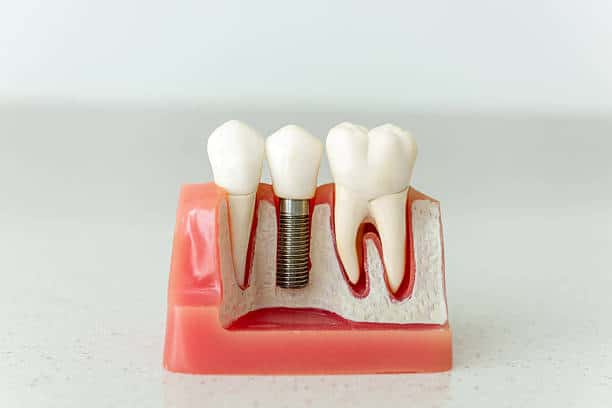
Dental implants work differently than bridges or dentures because they don’t just sit on top of the gum or rest against nearby teeth. They become part of the jaw itself. This happens through a biological process called osseointegration, where living bone cells grow directly onto the surface of a titanium implant.
This is why a well-integrated implant can feel natural, stay stable while withstanding daily chewing forces, help preserve the jawbone, and support function for decades. Understanding how this process works can help patients feel more confident about implant healing and what to expect during treatment.
At Bayside Oral & Facial Surgery, our oral surgeons have years of experience planning and placing dental implants for patients throughout Seekonk, MA and the surrounding Massachusetts and Rhode Island communities. Before discussing surgical steps, it helps to understand the biology behind implant healing and why osseointegration is the foundation of long-term implant success.
What Is Osseointegration?
Osseointegration is the direct connection that forms between living bone and the surface of a titanium implant. The bone treats the titanium as biocompatible, which means it accepts the implant rather than walling it off or rejecting it.
In a healthy, fully integrated implant, no soft tissue layer separates the bone from the implant surface. The bone essentially locks onto the titanium at a microscopic level, anchoring the implant securely inside the jaw.
According to a research review archived by the National Institutes of Health, osseointegration is defined as a direct structural connection between living bone and the implant surface, and this connection is what allows an implant to bear chewing forces over time.
Why Titanium Is Used for Dental Implants
Titanium has been the standard material for dental implants for decades, and several properties explain why:
- Biocompatibility. The body generally accepts titanium without triggering an immune response.
- Corrosion resistance. Titanium holds up well in the moist environment of the mouth.
- Strength. It can withstand the forces of chewing and biting.
- Lightweight. It does not add unnecessary bulk to the implant.
- Bone attachment. Its surface encourages bone cells to grow onto it rather than forming scar tissue around it.
Implant surface technology has continued to evolve, with ongoing research focused on improving how quickly and reliably bone attaches to the implant. The National Institute of Dental and Craniofacial Research supports research into dental materials, including implants and surface modifications designed to improve healing and long-term stability.
How Bone Cells Attach to the Implant Surface
Once an implant is placed, a series of biological steps begins almost immediately:
- A blood clot forms around the implant, creating the framework for healing.
- Specialized bone-forming cells called osteoblasts begin moving into the area.
- These cells produce new bone matrix directly onto the implant surface.
- Over time, this bone attachment strengthens at a microscopic level.
- The surrounding bone continues to remodel and mature around the implant.
This process does not happen overnight. It unfolds gradually, which is why healing time plays such an important role in long-term implant success.
How Osseointegration Happens After Dental Implant Surgery
Healing after implant placement generally moves through three overlapping stages. Timelines vary from patient to patient, but the biological pattern is similar.
Stage 1: Immediate Healing After Implant Placement
In the first days after surgery, a blood clot forms around the implant and the body begins its normal inflammatory response. This inflammation is a healthy part of healing, not a sign that something is wrong.
Soft tissue around the implant site starts to close, and early bone repair begins underneath. Mild swelling and soreness are expected during this stage and typically improve within a few days.
Stage 2: New Bone Growth Around the Implant
Over the following weeks, osteoblasts continue producing new bone directly onto the implant surface. This stage is where much of the microscopic fusion between bone and titanium takes place.
As new, stronger bone gradually replaces the early healing tissue, the implant becomes increasingly stable. This is a key part of what oral surgeons mean when they talk about implant stability building over time.
Stage 3: Bone Remodeling and Long-Term Stability
In the months that follow, bone around the implant continues to adapt. Normal chewing forces actually help stimulate healthy remodeling, encouraging the bone to stay strong around the implant.
By this stage, most patients have reached a level of implant stability that supports a permanent restoration. Healing timelines still vary based on the individual, the location of the implant, and whether bone grafting was part of treatment.
Factors That Influence Successful Osseointegration
Implant success depends on more than just the implant itself. Several biological and clinical factors work together to support healthy bone integration.
Bone Quality and Bone Density
Bone density is not the same everywhere in the jaw. Some areas have denser, stronger bone, while others are naturally softer. The lower jaw tends to have denser bone than the upper jaw, which can influence healing time and treatment planning.
Before recommending an implant, our surgeons often review a CBCT scan to evaluate the available bone, including its height, width, and density. If there is not enough bone to support an implant securely, bone grafting may be recommended to build a stronger foundation first.
Overall Health and Healing Ability
A patient’s general health can influence how well bone heals around an implant. Factors that may affect healing include:
- Diabetes, particularly when blood sugar is not well controlled
- Smoking, which can slow healing and reduce blood flow to the gums and bone
- Certain immune conditions
- Osteoporosis, along with some medications used to treat it
- Overall nutrition
Having one of these factors does not automatically rule out dental implants. Many patients with well-managed health conditions go on to heal successfully. Our surgical team reviews each patient’s health history individually to determine the safest, most effective treatment approach.
Surgical Technique and Implant Position
Precise planning plays a direct role in implant success. Using 3D imaging and CBCT scans, our surgeons map out implant angulation and depth before surgery begins through a process known as guided implant surgery. This approach helps avoid placing excessive pressure on the bone during surgery and supports better initial implant stability.
Following Post-Operative Instructions
What happens after surgery matters just as much as the surgery itself. Patients support healthy osseointegration by:
- Avoiding smoking during the healing period, since smoking can reduce blood flow and slow bone healing
- Maintaining good oral hygiene around the surgical site to help prevent infection
- Attending follow-up appointments so healing can be monitored and adjusted if needed
- Eating soft, appropriate foods while healing to avoid disturbing the implant site
- Avoiding excessive pressure on the implant site, such as chewing hard foods too soon, which can interfere with early bone attachment
How Long Does Osseointegration Take?
Healing time varies from patient to patient, so there is no single number that applies to everyone. In general, initial bone healing often progresses over several months, though the total time needed for full integration depends on the implant location, bone quality, and whether grafting was part of treatment. The patterns below can help set realistic expectations.
| Case Type | Typical Healing Consideration |
|---|---|
| Lower Jaw Implant | Often integrates somewhat faster due to denser bone |
| Upper Jaw Implant | May take longer due to naturally softer bone |
| Implant with Bone Grafting | Usually requires additional healing time before implant placement or loading |
| Sinus Lift Cases | Often need extended healing before the implant is placed or restored |
| Immediate Implant Placement | May follow a different timeline depending on bone support at placement |
These are general considerations rather than guarantees. Every treatment plan is customized based on the patient’s bone health, medical history, and the complexity of the case.
When Can the Final Crown Be Placed?
Before placing a final restoration, our surgeons confirm that the implant has reached adequate stability and bone integration. This may involve testing the implant’s stability and reviewing imaging to confirm healing progress.
Once integration is confirmed, restoration planning can move forward. Because every patient heals differently, timing for the final crown is always individualized rather than based on a fixed calendar.
Can Osseointegration Fail?
Implant failure is uncommon, but it can happen. Understanding the difference between early and late failure can help patients recognize when something needs attention.
Early Implant Failure
Early failure typically occurs before the implant has had a chance to integrate. Causes can include a lack of adequate bone integration, excessive implant movement during healing, infection, or general poor healing at the surgical site.
Late Implant Failure
Late failure happens after an implant has already integrated and been restored. This can result from peri-implantitis, an inflammatory condition affecting the tissue and bone around an implant, along with bone loss, excessive bite forces, trauma, or inconsistent oral hygiene over time.
Signs Patients Should Never Ignore
Patients should contact their oral surgeon promptly if they notice any of the following:
- Implant mobility or looseness
- Persistent pain that does not improve
- Ongoing swelling
- Drainage or discharge near the implant
- Unexplained bleeding
- A persistent bad taste near the implant site
- A loose or shifting restoration
If any of these symptoms occur, you should have an oral surgeon evaluate the implant promptly rather than waiting to see if it resolves on its own. Early evaluation gives patients the best chance of addressing a problem before it becomes more serious.
How Oral Surgeons Help Improve Implant Success
Experienced surgical planning plays a major role in helping implants integrate predictably and function well for years.
Comprehensive CBCT Evaluation
Before any implant is placed, a thorough evaluation of the jaw helps identify the safest and most effective treatment path. This includes assessing bone height, bone width, nerve position, sinus anatomy, and overall bone density. This level of planning allows our surgeons to anticipate challenges before surgery rather than during it.
Bone Grafting When Needed
When a patient does not have enough bone to support an implant, bone grafting can rebuild lost bone and create a stronger foundation. This step can improve long-term implant stability and help preserve results for years to come.
Choosing the Right Implant Treatment Plan
Not every patient needs the same approach. Depending on the number of missing teeth and the condition of the jawbone, treatment may involve:
- A single implant to replace one missing tooth
- Multiple implants placed throughout the mouth
- Implant-supported bridges to replace several teeth at once
- Full-arch treatment for patients missing most or all of their teeth
Each plan is built around the patient’s specific bone health, oral health, and long-term goals.
Why Osseointegration Makes Dental Implants Different From Other Tooth Replacement Options
Osseointegration is the reason implants function differently from dentures or bridges. The table below compares some key differences.
| Feature | Dental Implants | Bridges | Dentures |
|---|---|---|---|
| Bone Preservation | Helps stimulate and preserve jawbone | Does not directly support jawbone | Does not stimulate jawbone; bone loss may continue |
| Chewing Efficiency | Functions similarly to a natural tooth | Generally effective, but relies on neighboring teeth | Often reduced compared to natural teeth |
| Stability | Anchored directly in the bone | Depends on supporting teeth | Can shift or loosen over time |
| Long-Term Outlook | Designed for long-term, often decades-long use with proper care | Typically requires eventual replacement | Often need periodic relining or replacement |
Implants are not automatically the right choice for every patient, but for many people dealing with missing teeth or ill-fitting dentures, the ability to preserve jawbone and restore stable chewing function is a meaningful advantage.
Frequently Asked Questions About Osseointegration and Dental Implant Healing
What is osseointegration?
Osseointegration is the process by which living bone forms a direct connection to the surface of a titanium dental implant, anchoring it securely inside the jaw.
How long does bone take to fuse with a dental implant?
Healing time varies, but early bone attachment typically develops over several weeks, with continued bone remodeling and stability building over the following months.
Can dental implants fail to integrate with bone?
Yes, though it is uncommon. Early failure can occur if the bone does not integrate properly, often due to infection, excessive movement, or insufficient bone support at placement.
Does smoking affect osseointegration?
Smoking can slow healing and reduce blood flow to the gums and bone, which may increase the risk of complications during implant integration.
Does bone grafting improve implant success?
Bone grafting can rebuild bone that is too thin or soft to support an implant on its own, which can improve stability and long-term success for patients who need it.
Can older adults experience successful osseointegration?
Age alone does not prevent successful osseointegration. Many older adults heal well after implant placement, especially when overall health and bone quality are carefully evaluated beforehand.
Are dental implants stronger after healing?
Yes. As bone remodels and matures around the implant during the later stages of healing, stability generally continues to improve compared to the early healing period.
Can implants last for decades after successful osseointegration?
With healthy osseointegration, good oral hygiene, and regular dental care, implants are designed to support long-term function for many years.
Schedule a Dental Implant Consultation in Seekonk, MA
Successful dental implants start with careful planning and healthy osseointegration. If you are considering dental implants, bone grafting, a sinus lift, or full-mouth rehabilitation, an implant consultation is the best way to understand what treatment plan fits your bone health, oral health, and long-term goals.
Our oral surgeons use CBCT evaluation and personalized treatment planning to help patients across Southern Massachusetts and Rhode Island make informed decisions about implant care. Schedule a consultation with our team to discuss your options and take the next step toward a stable, long-lasting result.
