
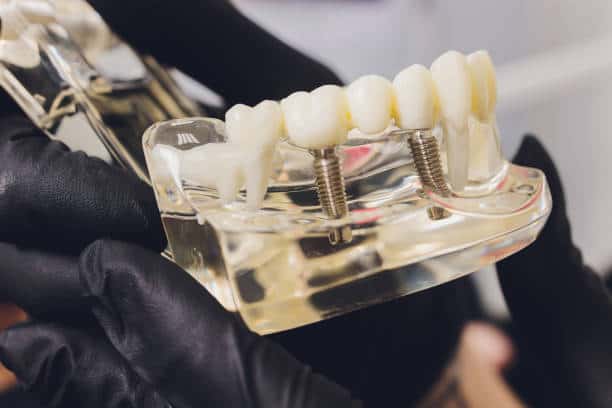
When patients ask about dental implants in Seekonk, most questions focus on cost, recovery, or what the implant looks like. But one of the most important factors in implant success rarely comes up in early conversations: bone density.
The quality and volume of your jawbone play a direct role in whether a dental implant can anchor properly, heal correctly, and hold up over time. Without enough bone support, an implant has no stable foundation to fuse to.
The good news is that low bone density does not automatically rule out dental implants. Many patients who have experienced bone loss are still candidates for implant treatment, often with the help of procedures like bone grafting, ridge augmentation, or sinus lifts.
At Bayside Oral and Facial Surgery in Seekonk, MA, our team uses advanced CBCT imaging to evaluate each patient’s bone quality and volume before recommending a treatment plan. This allows us to build an approach that fits your anatomy, your goals, and your long-term oral health.
Why Bone Density Matters for Dental Implant Stability
Dental implants work because they fuse directly to the jawbone. That process, called osseointegration, is what separates implants from other tooth replacement options. But for osseointegration to happen successfully, the bone receiving the implant needs to meet certain standards of quality and volume.
Bone density is not just one number. It reflects the strength, structure, and mineral content of the bone at the implant site. When bone density is adequate, an implant can achieve strong initial anchorage, support the biological integration process, and carry the load of chewing for years to come.
When bone density is low, the implant may lack the mechanical stability needed to start healing. This can affect the entire process from surgical placement through long-term function.
What Bone Density Means in Implant Dentistry
In implant dentistry, bone is evaluated in two ways: quality and quantity.
Bone quality refers to the internal structure and strength of the bone. This includes:
- Cortical bone: The dense, hard outer layer of the jaw that provides strong initial implant anchorage
- Trabecular bone: The softer, spongy inner layer that supports bone healing and long-term implant integration
Bone quantity refers to the physical dimensions of the available bone, including height, width, and depth at the implant site.
Both matter. An implant placed in high-quality bone with limited volume may not seat properly. An implant placed in a large volume of poor-quality bone may lack the structural support needed for osseointegration.
Implant planning accounts for both factors together.
How Dental Implants Attach to the Jawbone
When a dental implant is placed, it acts as an artificial tooth root. Over the weeks and months following surgery, the surrounding bone grows into and around the implant surface in a process called osseointegration.
This bone remodeling and implant fusion process is what gives the implant its long-term stability. As the bone heals and integrates, the implant becomes fixed in place, forming a secure foundation for the crown, bridge, or denture placed on top.
Implant stabilization during this healing phase depends heavily on the initial mechanical fixation achieved at surgery. That initial fixation comes directly from the bone.
Why Bone Quality Is Just as Important as Bone Volume
Many patients assume that having more bone is always better. But bone quality can be just as significant as volume when it comes to implant predictability.
Dense cortical bone provides strong mechanical anchorage from the moment the implant is placed. Softer trabecular bone, while important for healing, may require longer healing periods or additional planning to support stable integration.
An oral surgeon evaluating your implant site is not just measuring how much bone is present. They are assessing the full picture of what that bone can support, and how the implant should be positioned to take advantage of the strongest available structure.
Common Causes of Bone Density Loss Before Dental Implants
Bone loss in the jaw is more common than many patients realize. Several factors can reduce jawbone density or volume before implant treatment is considered.
Bone Loss After Tooth Extraction
One of the most frequent causes of jawbone shrinkage is tooth loss itself. When a natural tooth is removed and not replaced, the bone that once supported that tooth root begins to resorb, or break down, over time.
This process, called alveolar ridge resorption, can begin within weeks of an extraction and continue for months or years. A systematic review published in Clinical Oral Implants Research found that the jawbone can lose between 29 and 63 percent of its horizontal width within the first six months after tooth extraction, with the most significant bone changes occurring in the first three to six months following loss of a tooth.
The longer a tooth has been missing, the more bone loss may have occurred. This is one reason why timing matters when planning dental implants after an extraction.
Periodontal Disease and Jawbone Deterioration
Advanced gum disease, or periodontitis, is a leading cause of jawbone deterioration in adults. The infection damages the soft tissue and bone structures that hold teeth in place.
As periodontal disease progresses, the supporting bone around affected teeth can be destroyed. By the time teeth are lost to gum disease, the underlying bone may already be compromised, requiring evaluation and sometimes regenerative procedures before implant placement.
Aging and Natural Changes in Bone Structure
Bone naturally changes with age. Bone mineral density tends to decrease over time, and the jaw is no exception. For older adults considering dental implants in Seekonk or surrounding communities, these changes are accounted for in the surgical planning process.
Age alone does not disqualify a patient from receiving dental implants. Many older adults are successful implant candidates. The key is a thorough evaluation of the available bone and a plan that accounts for any changes in bone metabolism or healing response.
Medical Conditions That May Affect Bone Quality
Certain health conditions and medications can influence bone density and healing around implants. These include:
| Condition or Factor | Potential Impact on Implant Healing |
|---|---|
| Osteoporosis | Reduced bone mineral density may affect implant anchorage |
| Diabetes | Can slow healing and affect bone metabolism |
| Smoking | Reduces blood flow and slows bone healing |
| Certain medications | Some drugs affect bone turnover or healing response |
It is important to share your full medical history with your oral surgeon before implant treatment. This information helps your team plan the safest and most appropriate approach for your situation. This is not medical advice, and individual outcomes vary based on each patient’s health profile.
How Oral Surgeons Measure Bone Density Before Implant Treatment
Before recommending any implant procedure, an oral surgeon needs a clear picture of what the bone looks like at the proposed implant site. This requires more than a standard dental X-ray.
CBCT Imaging and 3D Bone Evaluation
Cone beam computed tomography, commonly called CBCT, is the standard imaging tool used for implant planning. A CBCT scan produces a three-dimensional image of the jaw that shows bone height, width, density, and the location of important structures like nerves and the sinus cavity.
At Bayside Oral and Facial Surgery, the surgical team uses this technology to assess bone density for dental implants with a level of detail that two-dimensional X-rays cannot provide. Patients who want to understand how this process works can learn more about CBCT 3D imaging for implant planning and what to expect during the evaluation.
The scan allows the team to assess the implant site from every angle, map bone quality across the treatment area, and plan implant placement with precision before surgery begins.
Evaluating Implant Sites Before Surgery
The CBCT scan gives the oral surgeon detailed information about each proposed implant location, including:
- Available bone height above the nerve or sinus
- Bone width at the site
- Cortical bone thickness
- Trabecular bone density
- The relationship between implant sites and surrounding anatomy
This implant site evaluation guides decisions about implant size, position, and angle, as well as whether additional bone procedures are needed before or at the time of placement.
Determining Whether Additional Bone Procedures Are Needed
Based on the CBCT findings, your oral surgeon will determine whether your current bone volume and quality can support implant placement directly or whether a preparatory procedure is recommended first.
Common preparatory procedures include:
- Bone grafting to rebuild volume at the implant site
- Ridge augmentation to restore the width or height of a narrow or flat jawbone
- Sinus augmentation to add bone below the sinus floor for upper jaw implants
These procedures are not complicated. They are planned steps in a well-organized implant treatment process.
Treatment Options When Bone Density Is Limited
Limited bone density does not mean implants are off the table. Several well-established procedures can rebuild or work around areas of bone deficiency.
Bone Grafting for Implant Site Development
Bone grafting adds material to an area where bone volume has been lost. The graft supports new bone growth over a healing period, creating a stronger foundation for the implant.
Grafting material can come from the patient’s own body, a donor source, or a synthetic material. The choice depends on the location, the volume of bone needed, and the patient’s overall health.
Bone grafting for dental implants is a routine part of implant treatment for many patients across Seekonk, Attleboro, Providence, and the surrounding Massachusetts and Rhode Island communities we serve.
Ridge Augmentation for Narrow Jawbone Areas
When the alveolar ridge has become too narrow or too flat to support an implant, ridge augmentation can restore the shape and volume needed for placement.
This procedure rebuilds the jawbone width or height using bone graft material, then allows the site to heal before the implant is placed. Horizontal ridge augmentation addresses bone width. Vertical ridge augmentation addresses bone height. Both are part of implant site reconstruction when the natural ridge no longer provides adequate support.
For patients in Seekonk and surrounding communities who have experienced significant jawbone volume loss, ridge augmentation for dental implants is one of the most commonly recommended preparatory steps before implant placement.
Sinus Lift Procedures for Upper Jaw Implants
The upper back jaw presents a unique challenge for implants because of the sinus cavity sitting just above the bone. When bone volume below the sinus is insufficient, a sinus lift adds bone to the floor of the sinus to create the space and support needed for implant placement.
For patients who need upper jaw implants and have been told their bone volume is limited, a sinus lift in Seekonk, MA, may be recommended as part of the overall implant treatment plan. This procedure is well-documented and routinely performed for patients traveling from Providence, Fall River, Warwick, and New Bedford who receive care at our Seekonk location.
Advanced Implant Solutions for Severe Bone Loss
For patients with severe bone loss who may not be candidates for standard grafting procedures, other options exist.
In cases involving significant upper jaw bone loss, zygomatic dental implants anchor into the cheekbone rather than the jaw, bypassing areas where insufficient bone makes standard implant placement difficult. Full arch implant reconstruction using All-on-X approaches can also provide a stable fixed result for patients with extensive bone loss across the jaw.
These complex implant cases require careful planning, advanced imaging, and a surgical team experienced in full arch implant reconstruction.
Can Patients With Low Bone Density Still Get Dental Implants?
This is one of the most common questions oral surgeons hear from patients who have been told they have bone loss. The answer, for many patients, is yes.
Why Low Bone Density Does Not Automatically Eliminate Implant Options
Low bone density changes the planning process. It does not automatically eliminate implant options. Many patients with reduced bone density, including those with jawbone atrophy after years of missing teeth, are still able to receive dental implants after appropriate preparation.
Regenerative procedures have made implant treatment accessible to a much broader range of patients than was possible even a decade ago. The key is having a thorough evaluation by an oral surgeon who can assess what is present and what is needed.
Personalized Treatment Planning for Complex Cases
Every patient’s anatomy is different. A patient with bone loss in one area may have solid bone in another. Implant positioning, angulation, and the choice of implant size and type are all adjusted based on the individual anatomy revealed through CBCT imaging.
Personalized implant treatment planning takes into account the patient’s bone structure, their health history, their tooth replacement goals, and their expected healing response. A plan that works for one patient may not be appropriate for another, even if the bone loss appears similar.
Modern Techniques That Improve Implant Predictability
Guided implant surgery uses data from CBCT scans to create a precise surgical guide that directs implant placement based on the patient’s exact anatomy. This improves accuracy and reduces the margin for error, particularly in areas with limited bone volume.
Combined with bone regeneration support and careful case planning, guided surgery has improved implant predictability for patients who would previously have been considered poor candidates.
FAQs About Bone Density and Dental Implants in Seekonk, MA
What bone density is needed for dental implants?
There is no single universal threshold. Oral surgeons evaluate bone density alongside bone volume, location, and overall health to determine whether a site can support implant placement. Adequate cortical bone for initial anchorage and sufficient trabecular bone for healing are both considered. A CBCT scan provides the detail needed to make this assessment.
Can I get dental implants if I have bone loss?
Many patients with bone loss are still candidates for dental implants. Depending on the severity and location of the bone loss, a preparatory procedure such as bone grafting or ridge augmentation may be recommended before implant placement. Your oral surgeon will evaluate your specific case.
Will I need a bone graft before dental implants?
Not every patient needs a bone graft. Some patients have sufficient bone volume and quality to support implants without any additional procedures. Others benefit from grafting to rebuild the implant site before placement. This is determined through imaging and clinical evaluation.
How is bone density measured for implants?
Bone density for implant planning is typically evaluated using CBCT imaging, which produces a three-dimensional scan of the jaw. This allows the surgical team to assess bone quality, volume, and the relationship between the implant site and surrounding structures such as nerves and the sinus.
Where can I get a dental implant evaluation in Seekonk, MA?
Bayside Oral and Facial Surgery in Seekonk, MA, offers dental implant consultations that include CBCT imaging and a full evaluation of bone density and implant options. We serve patients from Seekonk and surrounding communities across Massachusetts and Rhode Island, including Attleboro, Fall River, Providence, Warwick, New Bedford, and beyond.
Schedule a Dental Implant Consultation in Seekonk, MA
If you are considering dental implants and have questions about your bone density or jaw structure, the right starting point is a thorough evaluation.
At Bayside Oral and Facial Surgery, we use CBCT imaging to assess bone quality, identify any areas of bone loss, and build an implant treatment plan tailored to your anatomy and goals. Whether you need a single tooth implant, multiple implants, full arch reconstruction, or a preparatory procedure like bone grafting, ridge augmentation, or a sinus lift, our team can walk you through your options clearly and honestly.
We welcome patients from Seekonk, Attleboro, North Attleboro, East Providence, Fall River, New Bedford, Swansea, Warwick, Barrington, Raynham, Norton, and communities across Massachusetts and Rhode Island.
Schedule an appointment or call our office to speak with our team and take the first step toward understanding your implant options.
