
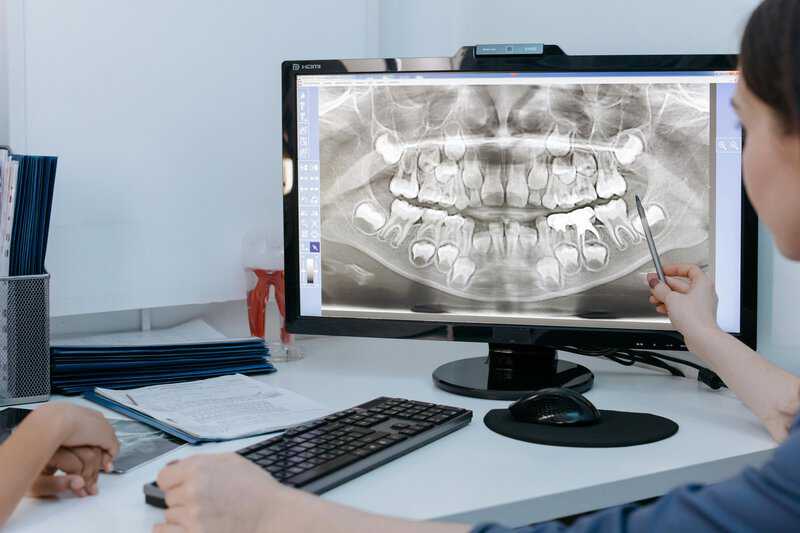
Oral surgery is a precise and delicate field, and recent technological advancements have transformed the way procedures are performed. Advanced technology plays a critical role in enhancing surgical outcomes, improving patient comfort, and minimizing recovery times. At our two convenient locations in Seekonk, MA, and East Providence, Drs. Laskarides, Ganjawalla, and Oread utilize the latest technological advancements to provide high-quality care and superior results for patients undergoing oral surgery.
The Role of Advanced Imaging
One of the most significant advancements in oral surgery is the development of sophisticated imaging technologies. Digital imaging, such as cone beam computed tomography (CBCT), provides high-resolution, three-dimensional images allowing an in-depth view of the teeth, bone structures, nerves, and soft tissues. CBCT imaging enables Drs. Laskarides, Ganjawalla, and Oread plan each procedure with unparalleled accuracy, reducing the risk of complications and improving surgical outcomes.
This advanced imaging technology is particularly beneficial for complex procedures, such as dental implant placements, wisdom teeth extractions, and jaw reconstructions. With CBCT, the surgical team can precisely determine the best location and angle for each implant, optimizing stability and longevity while minimizing trauma to surrounding tissues. Advanced imaging also aids in diagnosing hard-to-detect conditions, allowing for early intervention and improved patient outcomes.
What should I expect during an oral surgery consultation?
During your consultation, Drs. Laskarides, Ganjawalla, and Oread, will conduct a comprehensive evaluation, which may include advanced imaging techniques such as cone beam computed tomography (CBCT). This allows them to gain a clear understanding of your oral health, plan the procedure precisely, and discuss any questions or concerns you may have. They will also provide pre-and post-operative instructions and discuss anesthesia or sedation options for your comfort.
Minimally Invasive Techniques with Laser Technology
Laser technology has become a valuable tool in modern oral surgery, offering patients a minimally invasive alternative to traditional surgical methods. Lasers are used in a variety of procedures, including gum contouring, tissue removal, and treatment for infections. Compared to traditional surgical instruments, lasers provide increased precision and can reduce bleeding, swelling, and discomfort during and after the procedure.
The use of lasers also accelerates the healing process, as the laser’s energy promotes natural tissue regeneration. Patients undergoing laser-assisted procedures with Drs. Laskarides, Ganjawalla, and Oread, can expect shorter recovery times and a decreased likelihood of infection, allowing them to return to their daily activities sooner. Additionally, laser technology is often associated with a reduced need for anesthesia, contributing to a more comfortable experience overall.
How long is the recovery time after oral surgery?
Recovery times can vary based on the type of procedure, individual health, and adherence to post-operative care instructions. Generally, minor procedures may take a few days to a week, while more complex surgeries, like dental implants or bone grafts, may require several weeks for full healing. Drs. Laskarides, Ganjawalla, and Oread will provide personalized guidelines for a smooth recovery, minimizing discomfort and reducing the risk of complications.
How can I manage pain after oral surgery?
Pain management is essential for a smooth recovery, and Drs. Laskarides, Ganjawalla, and Oread, provide a customized post-operative plan tailored to each patient. They may prescribe pain relievers, recommend over-the-counter options, and suggest cold compresses or saltwater rinses to alleviate discomfort. Following these instructions closely will aid in managing pain effectively and speed up healing.
Enhanced Surgical Precision with Computer-Guided Surgery
Computer-guided surgery is another breakthrough that has transformed oral surgery by allowing for extremely precise treatment planning and execution. Using specialized software, Drs. Laskarides, Ganjawalla, and Oread, can create a digital model of the patient’s mouth, simulating the surgical procedure beforehand. This technology enables the surgical team to determine the ideal positioning and depth for each implant or surgical cut, improving accuracy and decreasing the chances of complications.
Computer-guided surgery is especially beneficial for patients undergoing dental implant procedures. The digital model allows the surgical team to identify the optimal location for each implant, taking into consideration factors such as bone density and proximity to nerves. This level of precision not only enhances the functionality and aesthetics of the implants but also contributes to greater long-term success rates.
What types of anesthesia are used in oral surgery?
To ensure patient comfort, Drs. Laskarides, Ganjawalla, and Oread offer several anesthesia options, including general anesthesia, local anesthesia, and IV sedation. The choice depends on the type of procedure, the patient’s anxiety level, and overall health. During the consultation, the doctors will discuss the best anesthesia options to suit your needs, ensuring a safe and comfortable experience.
The Benefits of 3D Printing in Oral Surgery
3D printing has introduced new possibilities for creating custom surgical guides, prosthetics, and even bone grafting materials. For patients requiring complex reconstructive surgeries, 3D-printed guides enable Drs. Laskarides, Ganjawalla, and Oread to operate with heightened precision, reducing surgical times and improving outcomes. 3D printing technology also allows for the customization of implants and prosthetics, providing a tailored solution that matches the patient’s anatomy perfectly.
This technology has proven especially advantageous in creating accurate, patient-specific guides for implant placement. With 3D-printed guides, the surgical team can ensure that each step of the procedure is performed as planned, enhancing the predictability of the outcome and minimizing any risk of error.
What dietary restrictions should I follow after my surgery?
Soft foods, such as smoothies, soups, and yogurts, are typically recommended immediately after surgery to prevent irritation or injury at the surgical site. Avoid hot, spicy, or crunchy foods, which can disrupt healing. Drs. Laskarides, Ganjawalla, and Oread will provide specific guidelines on what to eat and when you can return to a normal diet based on the type of surgery you undergo.
At our state-of-the-art locations in Seekonk, MA, and East Providence, Drs. Laskarides, Ganjawalla, and Oread, are committed to utilizing advanced technology to provide patients with exceptional oral surgical care. Through the integration of cutting-edge imaging, laser-assisted techniques, computer-guided planning, and 3D printing, patients can trust in a highly precise, efficient, and comfortable surgical experience.
We proudly serve the following areas: Attleboro, MA, Berkley, MA, Cape Cod and the Islands, Dartmouth, MA, Dighton, MA, Fairhaven, MA, Fall River, MA, Freetown, MA, Lakeville, MA, Marion, MA, Mattapoisett, MA, New Bedford, MA, North Attleboro, MA, North Attleborough, MA, Norton, MA, Raynham, MA, Rehoboth, MA, Seekonk, MA, Somerset, MA, Swansea, MA, Taunton, MA, Westport, MA Barrington, RI, Bristol, RI, East Greenwich, RI, East Providence, RI, Lincoln, RI, Little Compton, RI, Middletown, RI, Narragansett, RI, Newport, RI, North Kingstown, RI, North Providence, RI, Pawtucket, RI, Portsmouth, RI, Providence, RI, Rumford, RI, Tiverton, RI, Warren, RI, Warwick, RI.
